


Product
June 29, 2020
Mitsubishi Inverter FR E800
Fully supports AI and IoT systems for Smart Factory. Various intelligent functions for greater efficiency and maximum safety for you and your machines.
อ่านเพิ่มเติม


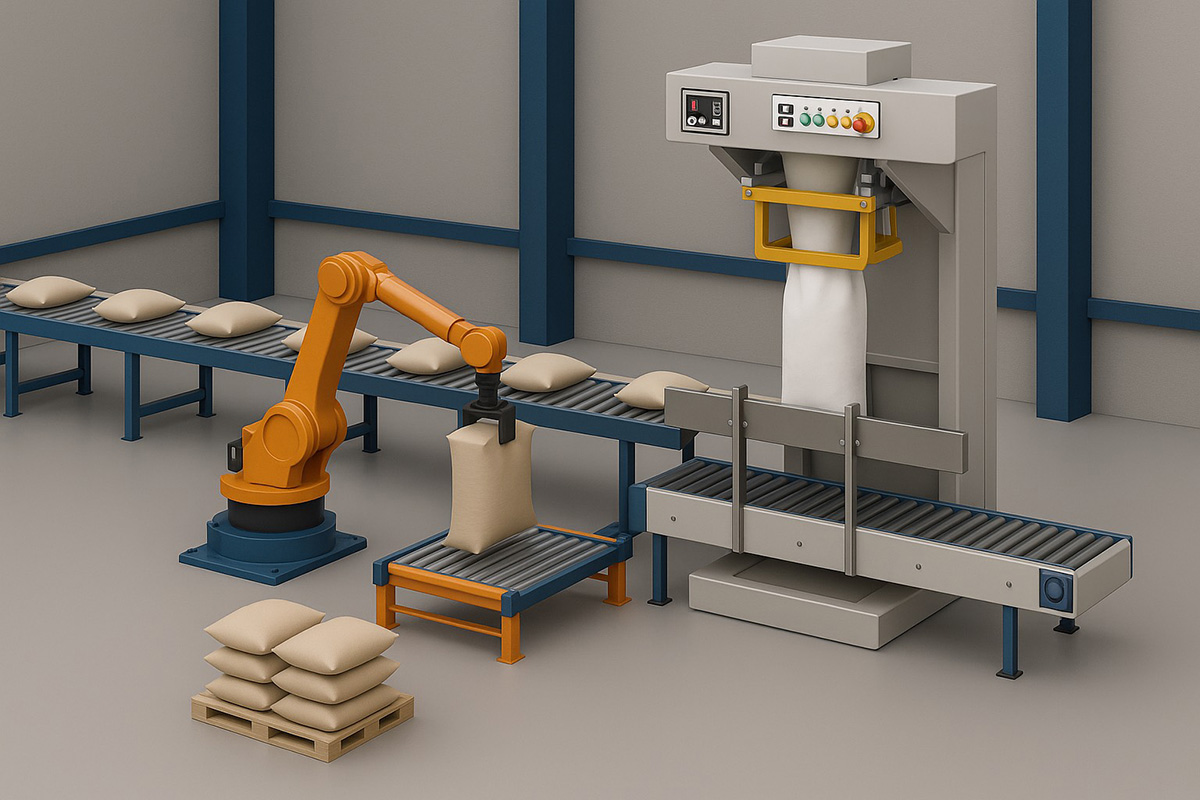
If you’re looking for a way to make your production line run more smoothly, cut costs, and upgrade your factory closer to a Smart Factory than ever before, this article is the guide you need!
We’ll help you easily understand what End-of-Line Automation is, how it works, and how it can transform your end-of-line operations to be faster, smoother, and smarter—the way an Industry 4.0 factory demands.
End-of-Line Automation from TKK Corporation is ready to be the solution for any industry looking to boost competitiveness.
This system enables the entire end-of-line process to operate automatically, from packing (Packing Solution), conveying (Conveyor Solution), robot palletizing (Robot Palletizing), metal detection (Metal Detector), weighing (Dynamic Checkweigher), internal material transport using Autonomous Mobile Robots (AMR), to automatic pallet storage (AS/RS).
Using End-of-Line Automation makes production lines faster, more consistent, and ensures reliable quality for every run. All solutions are fully connected, from the very first step to the final stage of shipping products out of the factory.
Investing in End-of-Line Automation is not just about adding more machines to the production line—it’s a major factory upgrade that increases speed, reduces costs, and makes every step at the end of the line more precise and visible.
Here are three key advantages that make world-class factories increasingly choose solutions from TKK Corporation.
In fact, End of Line Automation is suitable for almost any industry that manufactures or packages products. It helps the final stages of the production line run faster, more consistently, and reduces manual labor significantly. Whether you operate a small factory looking to improve efficiency step by step or a large factory aiming to speed up production, this system can be adapted to meet your needs.
Examples of industries that commonly use it include:
Once you understand how End of Line Automation benefits a factory, let’s take a look at the “key components of the end-of-line automation system.” We’ll explore what each solution does and how it can enhance your production line.
Solution that automates the entire product packaging process – from feeding the products, measuring the quantity (dosing), filling into packaging, to sealing and checking completeness before moving on to packing or palletizing. This system enables the production line to run faster, maintain consistent quality, reduce errors, and save labor effectively.
It is suitable for various types of packaging tasks, such as:
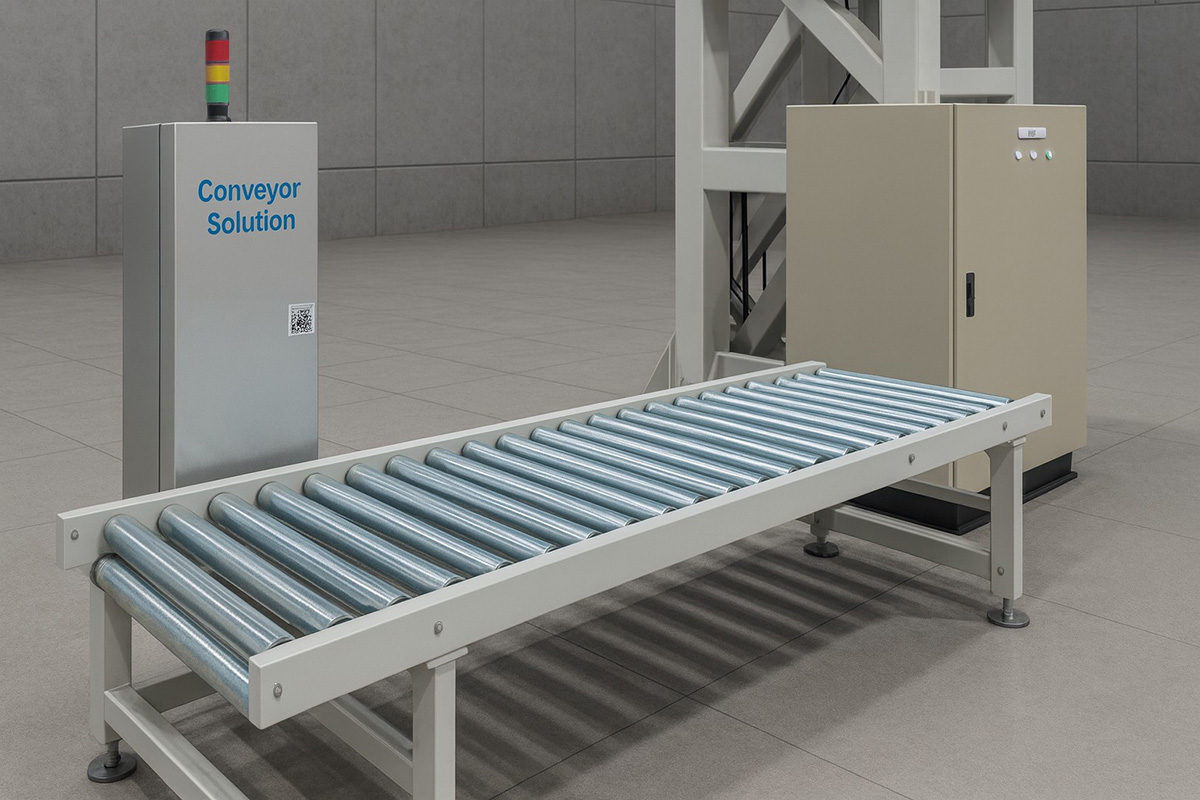
After products are packed and prepared for the next step, the conveyor’s role is to transport them continuously and accurately from one point to another. It acts as a link that connects all processes in End of Line Automation, ensuring smooth, uninterrupted operation—from packing, to quality inspection, to palletizing.
The conveyor system is designed to handle a wide variety of products, whether small, large, or heavy, while maintaining stable speed and precise positioning.
Common conveying tasks in production lines include:
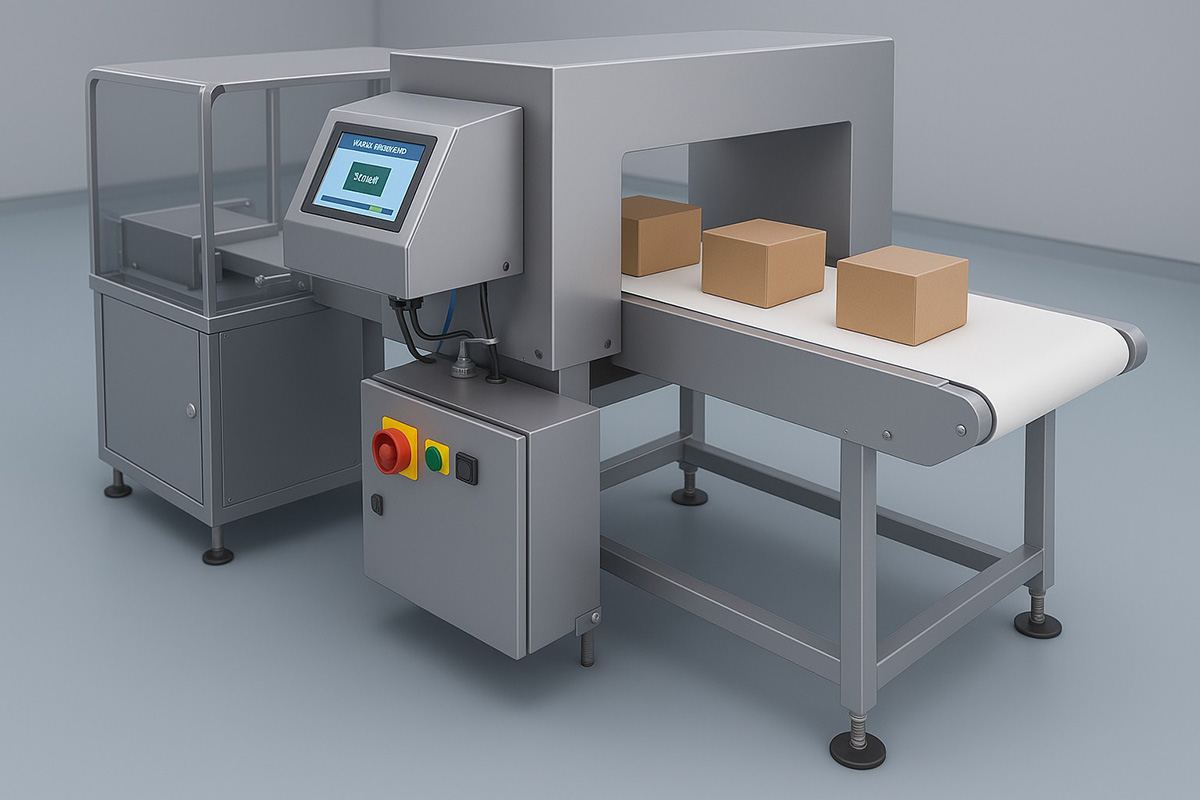
This machine automatically detects metal contaminants in products as they pass along the conveyor. It is designed with high sensitivity, capable of detecting even very small metal pieces, and features a fast and precise automatic reject mechanism. This ensures that only safe and standard-compliant products move on to the next stage.
Common applications of the Metal Detector in production lines include:
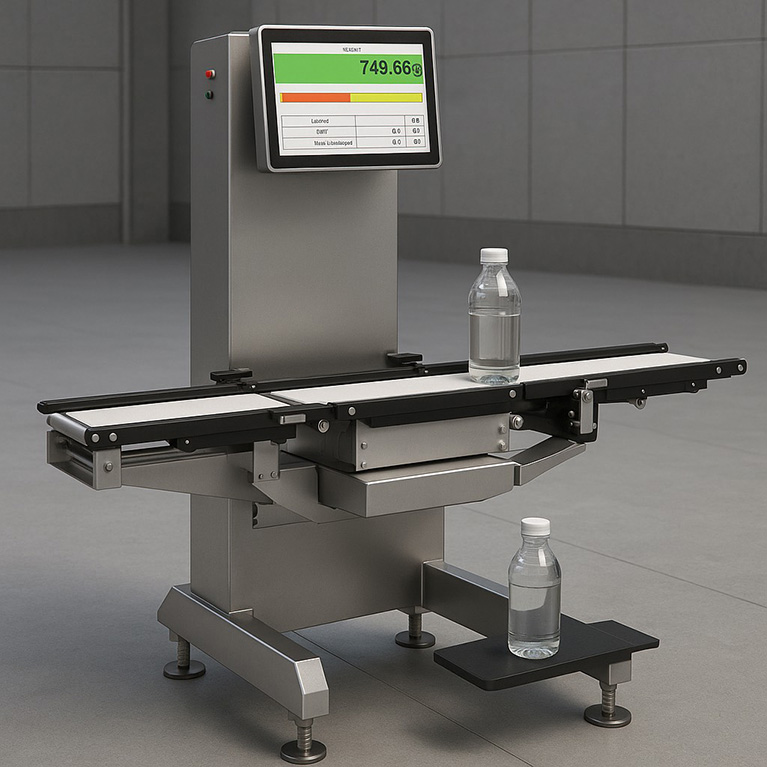
This is an automatic checkweigher that operates continuously on a conveyor belt, allowing the weight of each product to be inspected without stopping the production line, even for a second. The system immediately compares the actual weight with the preset standard. If a product is found to be overweight or underweight, it is automatically rejected. This ensures that all products leaving the line are consistent and meet quality standards.
Typical applications in production lines include:
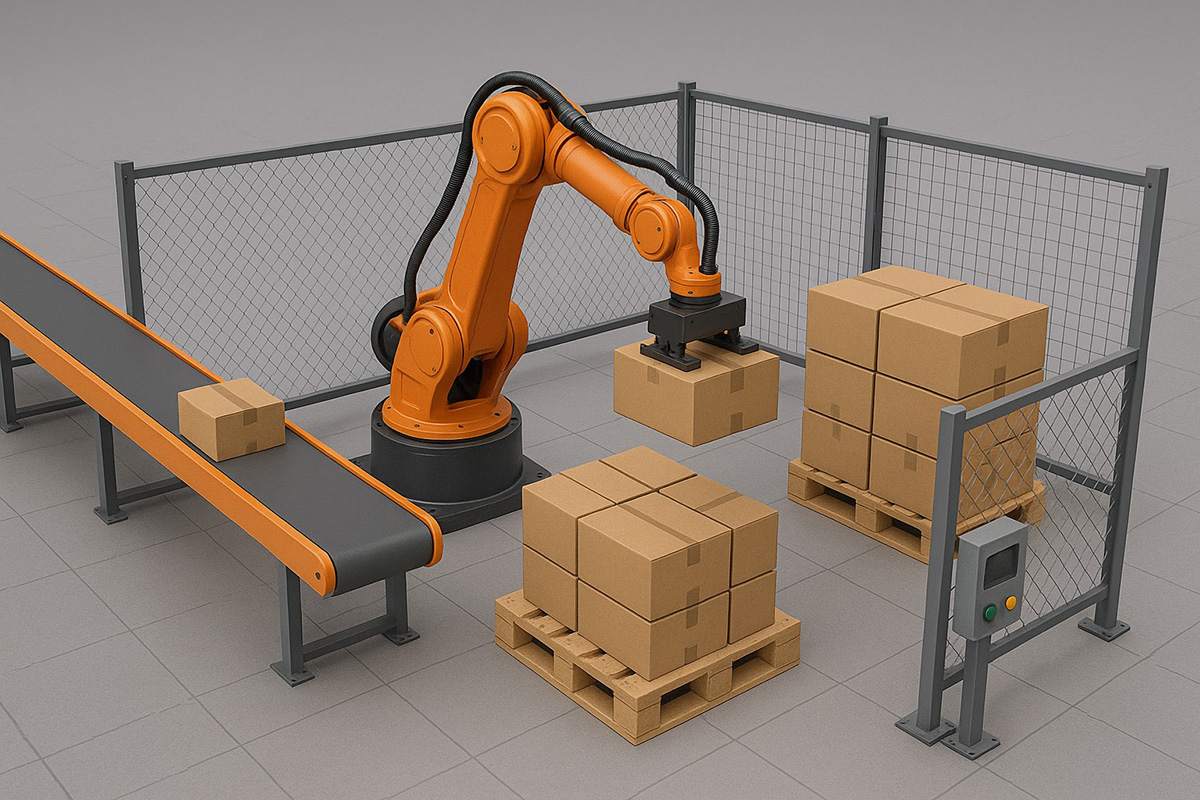
Palletizing is one of the most labor-intensive processes in a production line. An automated robot palletizing system can operate continuously 24 hours a day, lifting and arranging products in complex patterns—including cartons, bags, bottles, or jars—while precisely controlling placement every time. This results in highly stable pallets, making them ideal for transportation and warehouse storage.
Common palletizing applications in factories include:
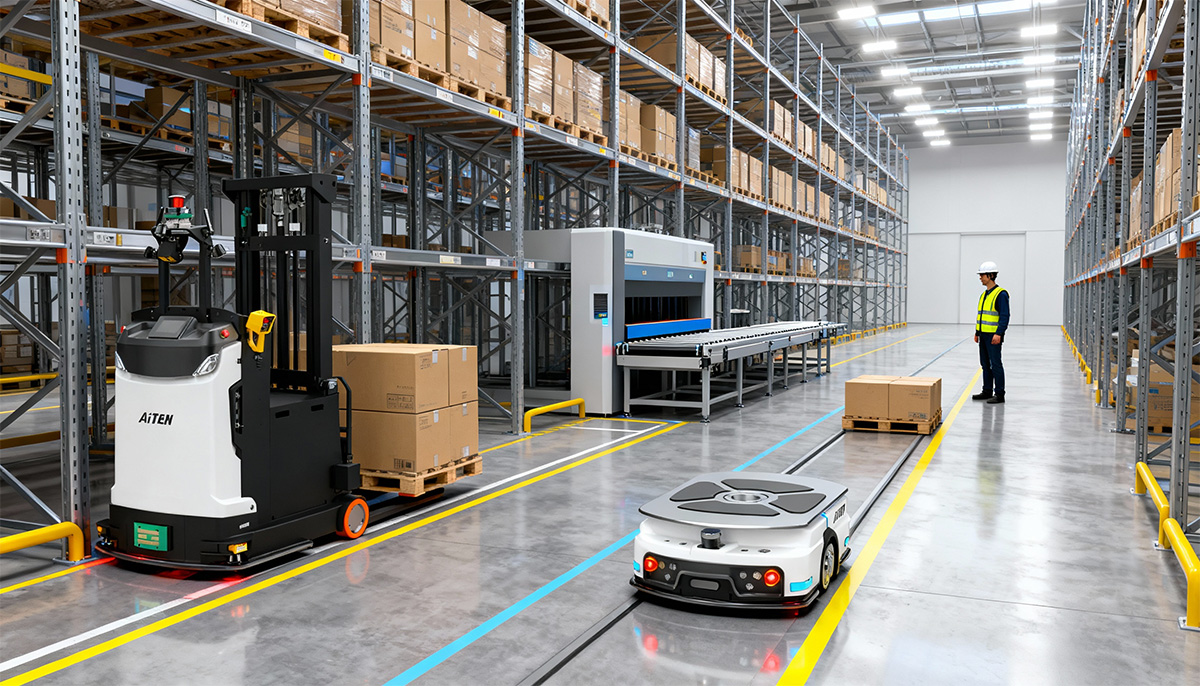
These autonomous mobile robots handle internal material transport within a factory, replacing traditional manual handling. They can navigate independently, determine their own routes, and operate continuously without supervision.
This includes Autonomous Mobile Robots (AMR), which flexibly select routes based on the actual environment, and Automated Guided Forklifts (AGF), which function as automated forklifts specifically designed for pallet lifting and transport. Both systems enable accurate pick-and-delivery, reduce waiting time, minimize misplacement errors, and significantly improve workflow throughout the production line.
Common applications of mobile robots include:
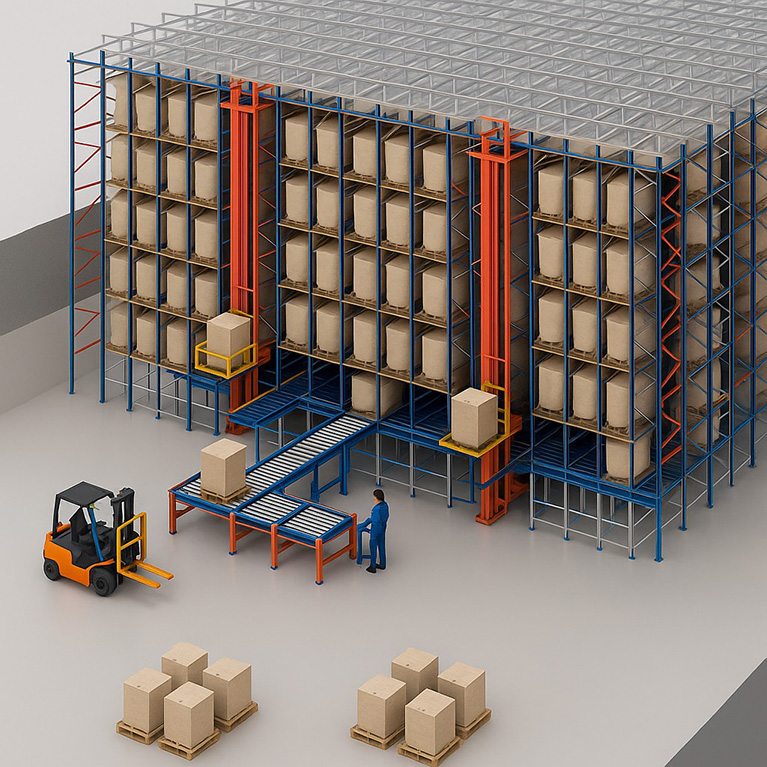
This automated storage system helps lift pallets in and out of the warehouse accurately and orderly, without the need for manual labor that could be risky or time-consuming. The system automatically stores pallets in designated locations and can retrieve them immediately when needed, making warehouse operations faster, safer, and allowing real-time inventory checks without having to manually search for items.
Examples of its operations include:
It’s time to upgrade your end-of-line operations with End of Line Automation from TKK Corporation.
If you want your production line to run faster, reduce labor costs, improve accuracy, and truly transform your factory into a Smart Factory, the End of Line Automation system is the perfect solution. It turns tasks that once required manual labor into automated processes that operate smoothly and continuously, boosting efficiency across every step of your production line.


