


Catalogues


Apiste Precision chillers
Precision Chillers
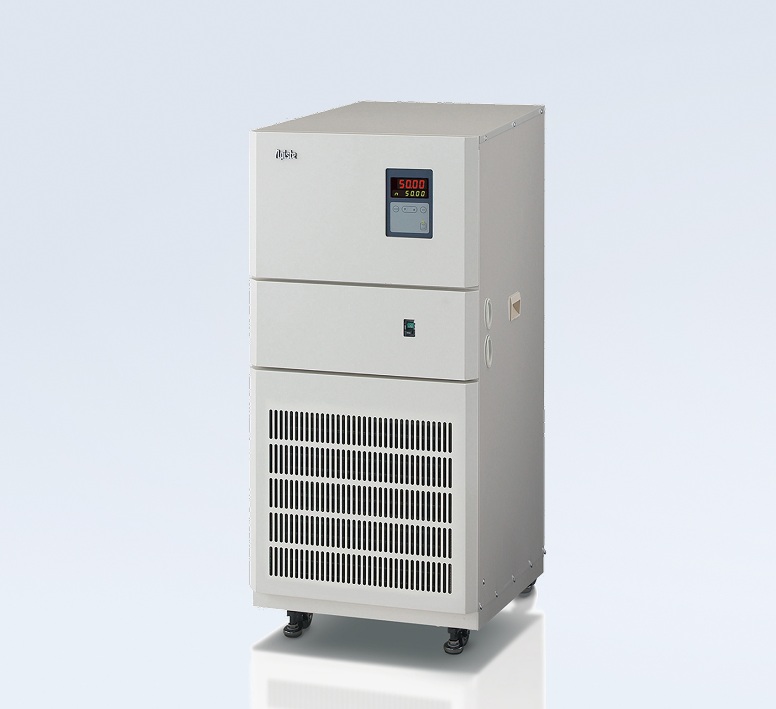
Precision Chillers
High precision and maximum stability
Featuring a newly developed refrigeration circuit with “Triple Valve Control” and the “Parallel Task Control” control algorithm.
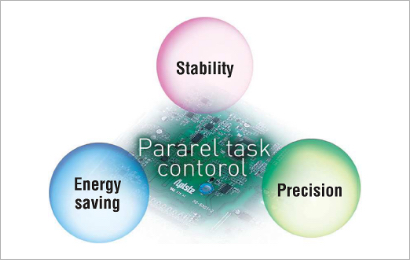
Exceptional precision and superior stability
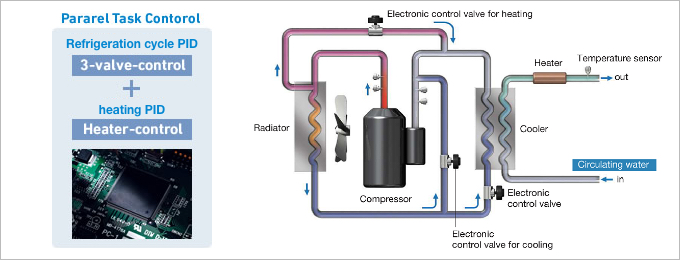
Equipped with Apiste’s proprietary refrigeration system, incorporating “Triple Valve Control” technology, which consists of three electronic control valves. These valves continuously monitor temperature, refrigerant pressure, and cooling water temperature.
The newly developed “Parallel Task Control” algorithm performs high-precision PID control of all three electronic valves and a compact heater simultaneously, based on data from multiple sensors.
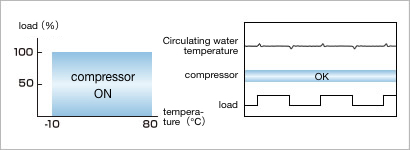
Apiste’s unique cooling technology enables cooling capacity to be adjusted continuously from 0 to 100% without stopping the compressor, achieving ultra-high precision, high stability, a wide temperature control range, and energy savings—performance levels that conventional chillers using inverter control or hot-gas control have not been able to achieve.
Three Control Modes
Three operating modes can be selected to suit a wide range of installation environments and applications, ensuring optimal performance according to the intended use.
- High-Precision Mode — Delivers the highest level of accuracy
This control mode is ideal for applications requiring exceptionally high precision. It provides full performance across the entire temperature range from −10°C to 80°C.
- Eco Mode — Optimized for maximum energy efficiency
A control mode focused on energy savings and fast response. In cooling operation, the system can run at low power without the need for a heater. This mode maintains high performance even under conditions with large load fluctuations or disturbances.
- Normal Mode — High operational stability for general use
A control mode emphasizing fast response and high stability. Even when switching between cooling and heating modes, the system maintains excellent stability through continuous and responsive control.
Wide temperature control range from −10°C to 80°C
Apiste’s Parallel Task Control technology provides a wide temperature control range from −10°C to 80°C, enabling continuous operation across all temperature ranges without stopping the compressor.
This eliminates instability caused by conventional ON/OFF control, while delivering maximum precision and stability at every operating temperature.
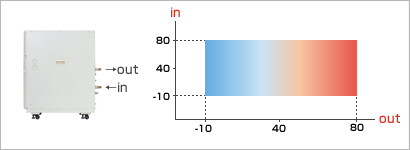
Resistant to high inlet circulating water temperatures and load fluctuations
When the inlet circulating water temperature to the chiller rises due to changes in equipment load, conventional chillers may stop the compressor, preventing further cooling.
However, with Apiste’s Parallel Task Control technology, the system can effectively manage increases in inlet water temperature without the need to stop the compressor, ensuring continuous and stable cooling performance.
A newly redesigned structure focused on high reliability
Bottom Tank Structure
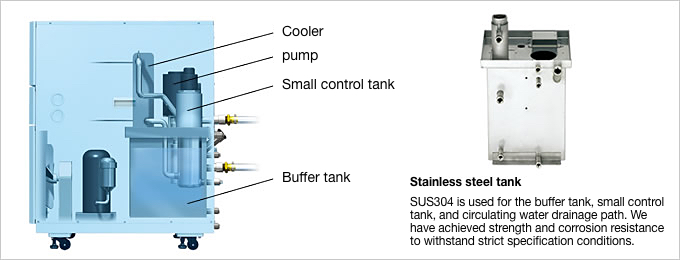
A highly reliable bottom tank structure in which all components along the circulating water path are installed above the tank—Apiste’s proprietary structural design. This top-mounted configuration is engineered to better withstand unexpected leaks.
A newly developed high-performance pump draws circulating water from the tank upward and delivers it reliably and stably to the equipment.
Dual-Tank Structure for Energy Efficiency and Stability
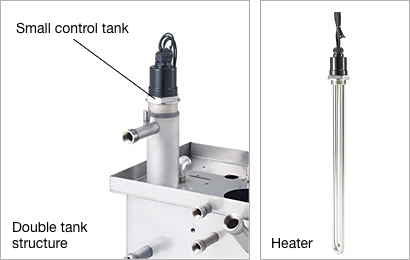
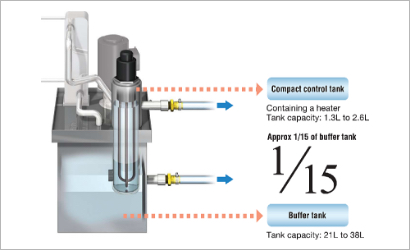
The chiller unit features a dual-tank structure consisting of a buffer tank and a compact temperature-control tank.
Circulating water in the buffer tank is pumped to the refrigeration unit for cooling, then transferred to the compact tank for temperature control. Temperature control is applied only to the circulating water within the compact tank, rather than to the entire water volume in the system, resulting in significant energy savings.
In addition, this design eliminates instability caused by uneven heating and enables the system to maintain high precision and stable performance.
Cavitation Prevention Function
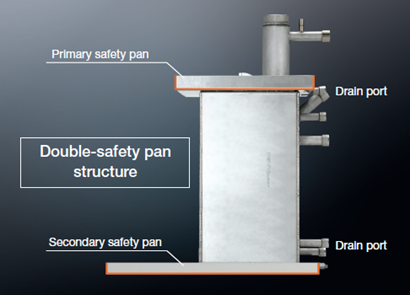
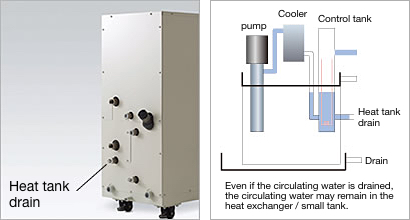
The phenomenon known as “cavitation” may occur during chiller maintenance. Even after circulating water is drained from the chiller unit, some water may remain in the heat exchanger, heater tank, and load-side equipment, and air bubbles may remain in the circulation path when water is refilled. As a result, pump pressure may not be properly transmitted, preventing normal circulation.
Therefore, all models in the PCU Series are equipped with a heater tank drain port to remove any remaining water. This function serves as a safety measure when refilling the system with circulating water after drainage.
Single-Exhaust Structure (Air-Cooled Type)
Air-cooled chillers are designed with air intake and exhaust paths for heat exchange located at the front and rear of the unit, rather than on the sides. This allows multiple chiller units to be installed close together, saving significant space.

Comprehensive External Input/Output Functions
The chiller comes standard with a wide range of external input/output functions to support various external devices and machinery.
These functions cover all operational needs without requiring additional features.

1. Fault Signal Output
The chiller is equipped with a voltage-free contact output that supports a maximum load of AC 250V, 2A, allowing fault signals to be sent externally. This output can not only be connected to a PLC but can also control indicator lights and buzzers.

2. Multiple Circulating Water Alarm Outputs
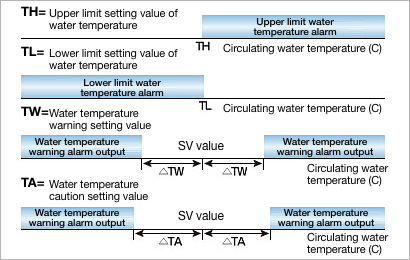
The PCU Series emphasizes precise control of circulating water temperature. In addition to setting maximum and minimum temperature limits, warning and alert thresholds can also be configured.
The system accurately detects changes in circulating water temperature and sends signals externally, enabling comprehensive control of circulating water temperature.
3. Chiller Stop Signal Output
This output is used to monitor the operation or stoppage of the chiller. It can serve as a confirmation signal when controlling the chiller externally and can also indicate the chiller’s operational status via indicator lights.
4. Automatic Water Valve Output
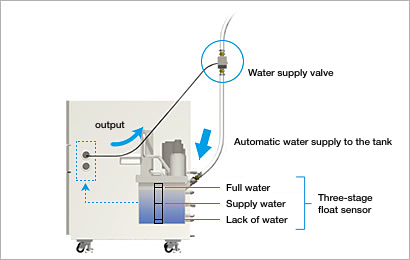
The chiller is equipped with an output for an automatic water valve, allowing water to be supplied to the chiller automatically and reducing the hassle of manually filling circulating water.
Three-level float sensors installed in the chiller tank detect full water, refill required, and low water conditions, sending signals to the external water valve as needed. This enables easy automatic water supply by controlling the valve’s open/close operation.
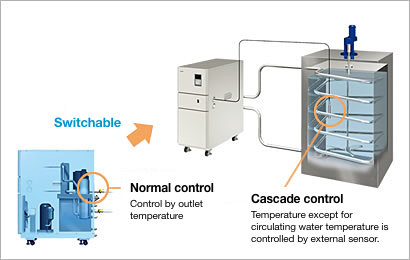
5. External Temperature Control
The chiller comes standard with terminals for external temperature control. By default, it measures the circulating water temperature at the chiller outlet, but it can be switched to control using an external sensor.
It supports primary PID control based on the circulating water temperature of the process, as well as cascade control according to the temperature of the associated process equipment.
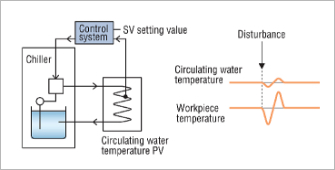
Primary PID Control
The chiller controls the system to keep the circulating water temperature close to the desired setpoint. This direct control of the circulating water temperature ensures system stability, but the response to fluctuations is slow, and error correction is limited.
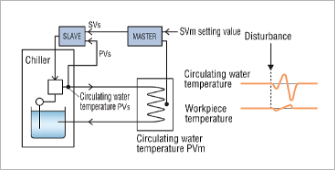
Cascade Control
In cascade control, the process temperature (PVm) is compared with the setpoint temperature of the process (SVm) to determine the setpoint of the circulating water (SVs).
This allows temperature fluctuations caused by various disturbances to be controlled quickly and effectively.
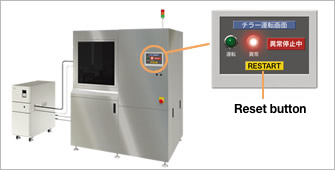
6. Emergency Stop / Alarm Reset Input
The chiller is equipped with an emergency stop input for safety, allowing the chiller to be stopped via an external signal.
It can be connected to a separately installed water leak sensor or an emergency stop button on a control device. When an emergency stop signal is received, E-99 is displayed and the event can be recorded in the operational history.
This input can also be switched to function as an alarm reset input if needed. External devices such as water leak sensors or emergency stop buttons can utilize this input.
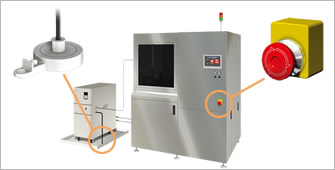
The emergency stop input can be switched to function as an alarm reset input.
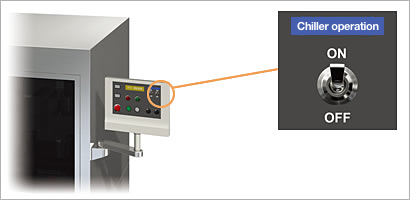
7. External Start/Stop Input
The chiller is equipped with terminals for external control input, allowing the PCU unit to be started or stopped from external devices.
Thanks to a dedicated circuit, external control is straightforward—simply provide a contact signal. When used together with the start/stop output, this enables more effective and reliable external control.
Supports Data Communication with PLC
The chiller comes standard with an RS-232C port, enabling remote control and error code monitoring from external devices.
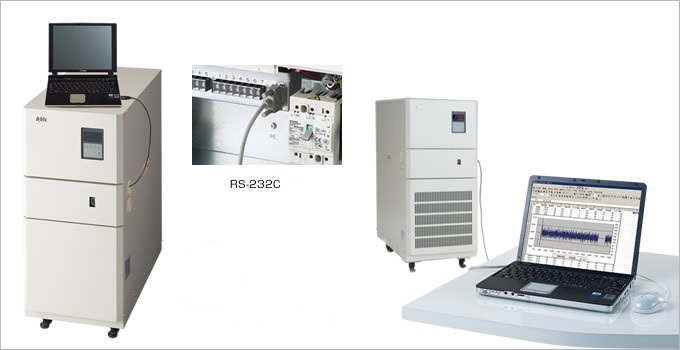
External Remote Control / Error Code Monitoring
Control settings and output configurations can be adjusted from external devices, allowing on-site adjustments to ensure optimal and efficient operation.
In addition, the system can monitor up to 31 error codes for the PCU unit.
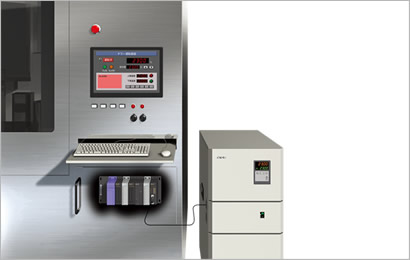
[Communication Equipment List]
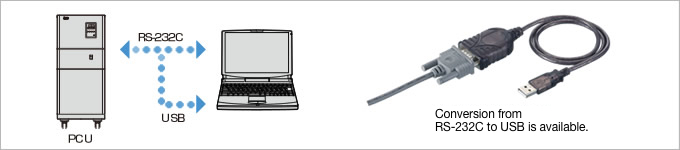
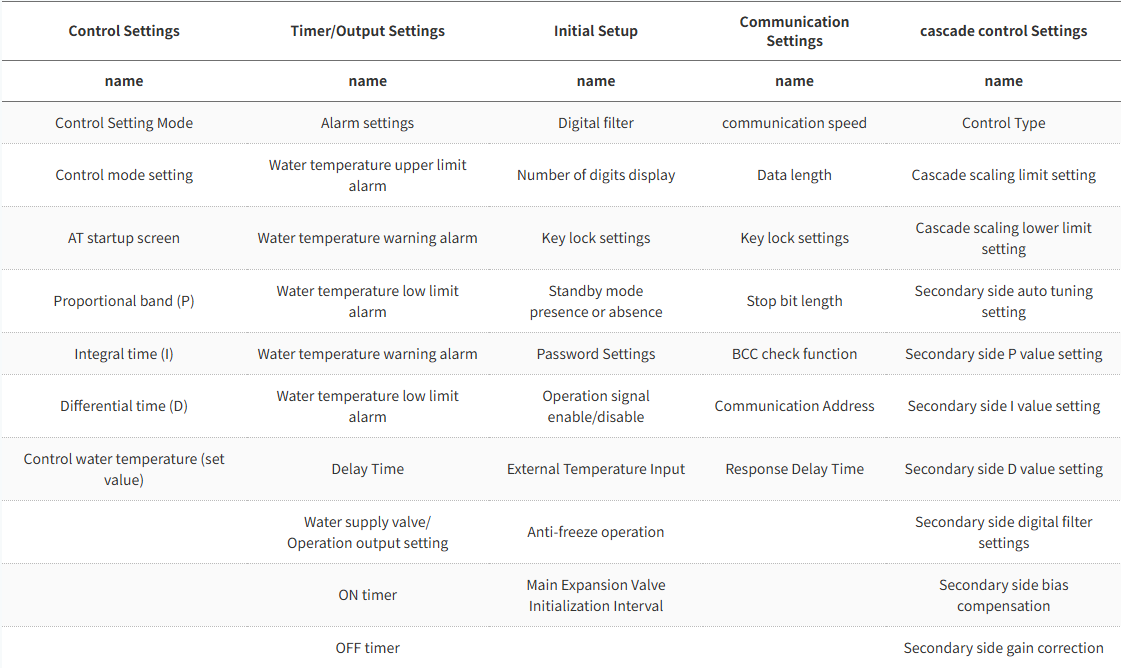
[List of Communication Equipment]
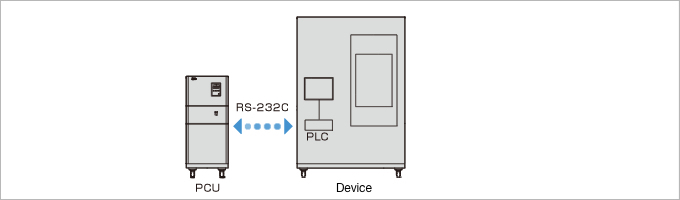
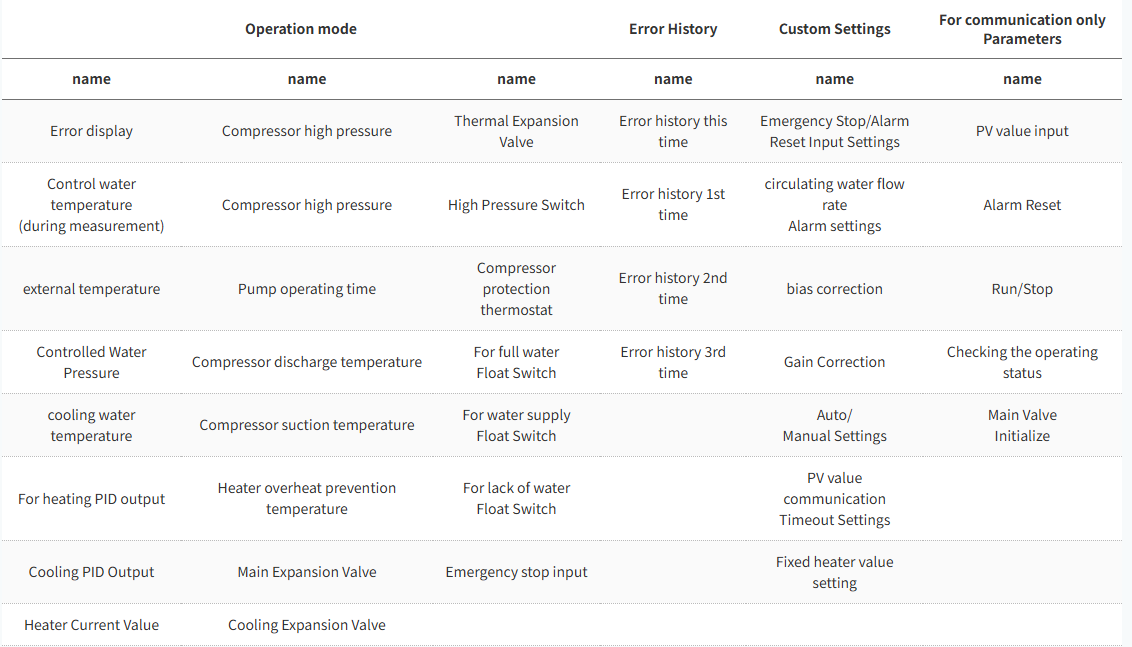
High-Precision Temperature Control Chillers
Air-Cooled Type
PCU-1610R (Wide Range)
- Cooling Capacity (W): 1200 / 1300
- Heating Capacity (W) *: 700
- Circulating Water Temperature Range (°C): -10 to 80
- Temperature Control Accuracy (°C): ±0.05 (High-Precision Mode)
- External Dimensions (H×W×D, mm): 950 × 400 × 770
PCU-3310R (Wide Range)
- Cooling Capacity (W): 2800 / 3100
- Heating Capacity (W) *: 1000
- Circulating Water Temperature Range (°C): -10 to 80
- Temperature Control Accuracy (°C): ±0.05 (High-Precision Mode)
- External Dimensions (H×W×D, mm): 1000 × 440 × 800
PCU-6320R (Wide Range)
- Cooling Capacity (W): 5800 / 6200
- Heating Capacity (W) *: 6000
- Circulating Water Temperature Range (°C): -10 to 80
- Temperature Control Accuracy (°C): ±0.10 (High-Precision Mode)
- External Dimensions (H×W×D, mm): 1250 × 440 × 800
PCU-6330R (Wide Range)
- Cooling Capacity (W): 5700 / 6100
- Heating Capacity (W) *: 6000
- Circulating Water Temperature Range (°C): -10 to 80
- Temperature Control Accuracy (°C): ±0.10 ±0.05 (High-Precision Mode)
- External Dimensions (H×W×D, mm): 1250 × 440 × 800
Water-Cooled Type
PCU-W3610R (Wide Range)
- Cooling Capacity (W): 3100 / 3400
- Heating Capacity (W) *: 1000
- Circulating Water Temperature Range (°C): -10 to 80
- Temperature Control Accuracy (°C): ±0.05 (High-Precision Mode)
- External Dimensions (H×W×D, mm): 1000 × 440 × 800
PCU-W6630R (Wide Range)
- Cooling Capacity (W): 5900 / 6400
- Heating Capacity (W) *: 6000
- Circulating Water Temperature Range (°C): -10 to 80
- Temperature Control Accuracy (°C): ±0.05 (High-Precision Mode)
- External Dimensions (H×W×D, mm): 1250 × 440 × 800
PCU-W9130R (Wide Range)
- Cooling Capacity (W): 7900 / 8900
- Heating Capacity (W) *: 6000
- Circulating Water Temperature Range (°C): -10 to 80
- Temperature Control Accuracy (°C): ±0.05 (High-Precision Mode)
- External Dimensions (H×W×D, mm): 950 × 400 × 770

Application


